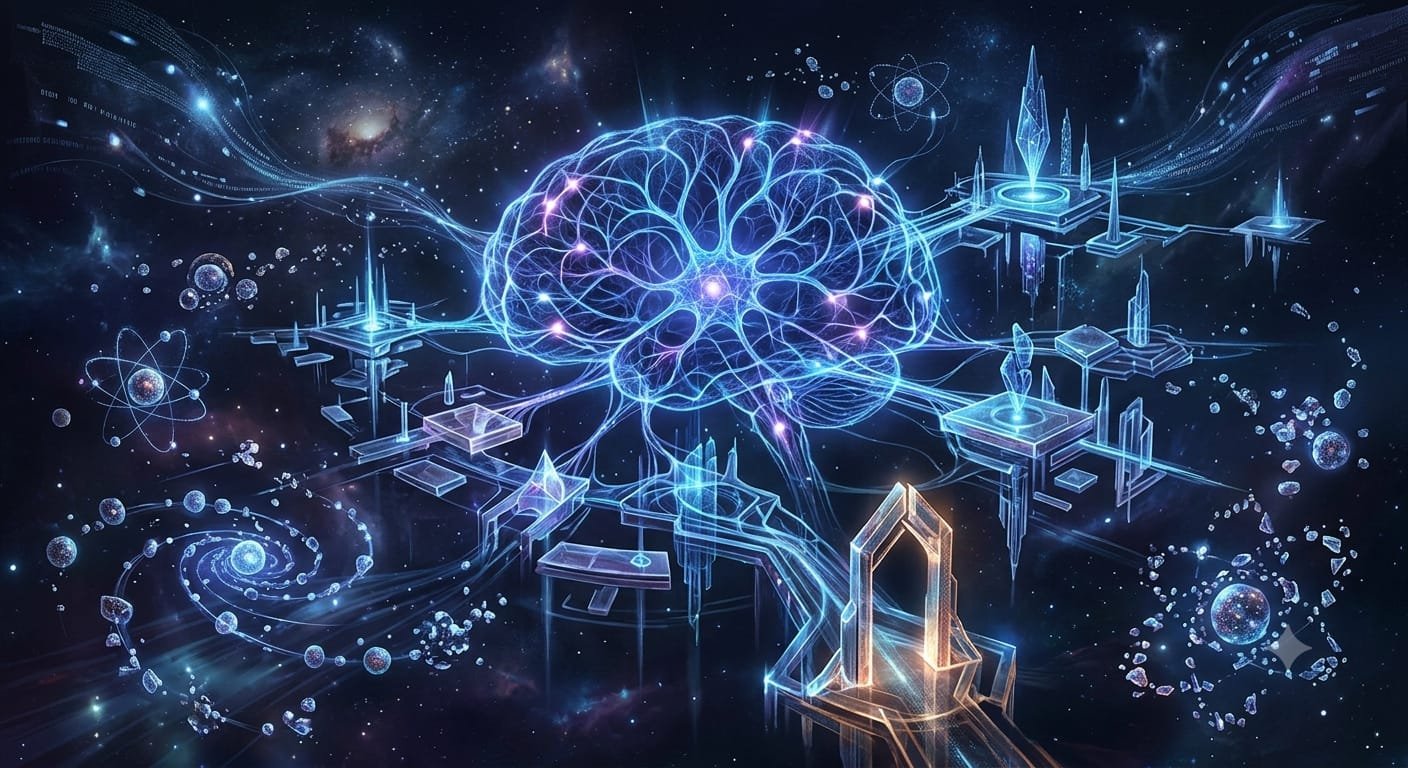
The intelligence by which we have sought to comprehend the universe has itself become an object of our making. We are learning to construct systems that perform operations once regarded as signs of a mind, while the nature of mind remains a matter of dispute. This conjunction gives our age its peculiar philosophical difficulty. Our power to reproduce the expressions of intelligence advances more rapidly than our understanding of what those expressions warrant. A machine may answer our questions, expose our errors, and offer an account of its own activity. We must still ask what has thereby been achieved: whether a capacity has been reproduced, a judgement justified, or a world disclosed to a subject. The distinction concerns the meaning of knowledge itself. The question did not begin with the computer. It belongs to that enduring movement of inquiry in which the knower, having examined the world, turns towards the conditions of his own knowing. The Indian philosophical traditions pursued it through disagreements about the self, the instruments of cognition, and the grounds upon which an appearance may be accepted as true. Modern science approaches it through the investigation of physical organisation, learning, and the neural conditions associated with experience. These inquiries cannot be made equivalent by an attractive resemblance of language. Nor should their differences prevent them from examining one another’s assumptions. Their encounter demands intellectual discipline: the willingness to distinguish what has been demonstrated from what has been interpreted, and what remains unknown from what has been declared unknowable. Artificial intelligence makes this discipline consequential beyond philosophy. The judgements we form about minds influence whom we believe, what we entrust to machines, and whose suffering we recognise. If we mistake performance for the measure of existence, we may overlook a subject who cannot answer us; if we take every persuasive answer as evidence of a subject, we may attribute experience where its presence has not been established. We therefore need an inquiry equal to both possibilities. Before asking whether our creations will surpass us, we must examine how we recognise a mind, and what that recognition permits us to conclude.
In 2006, Adrian Owen and colleagues published a result in Science that recalibrated the evidentiary standards for detecting awareness. A woman clinically diagnosed as being in a vegetative state, a condition characterised by wakefulness without behavioural evidence of awareness, was instructed to imagine playing tennis. Functional magnetic resonance imaging (fMRI), which measures changes in blood oxygenation as an indirect proxy for neural activity, recorded a pattern of activation in the supplementary motor area that is reliably associated with motor imagery. When instructed to imagine moving through her home, a different pattern appeared in the parahippocampal gyrus, reliably associated with spatial navigation. The task-specificity of these responses was the evidential crux: the patterns were not merely “brain activity” but differentiated responses contingent on the semantic content of the instruction. Owen et al. interpreted this as evidence that the patient had understood and deliberately followed commands despite the absence of any behavioural response [1]. Eighteen years later, Bodien et al. published a six-centre study in the New England Journal of Medicine that extended this finding. Of 353 adults with disorders of consciousness, 241 did not exhibit observable command-following at the bedside. Among these, 60, approximately 25%, demonstrated cognitive motor dissociation (CMD): fMRI or electroencephalography (EEG) evidence of instructed cognitive response despite behavioural silence. The study was a selected clinical cohort, not a population-wide prevalence estimate, and failure to exhibit CMD does not establish the absence of awareness. Indeed, only 43 of the 112 participants who followed commands behaviourally produced a detectable task response on fMRI or EEG, underscoring the limitations of a negative result. Complementary bedside approaches such as the perturbational complexity index (PCI), which perturbs the cortex with transcranial magnetic stimulation and measures the algorithmic compressibility of the resulting electrocortical response, similarly detect covertly aware patients whose dynamical brain activity remains both integrated and differentiated despite motor silence [7]. Across both paradigms, the evidential structure is clear: in a population where behaviour suggested absence of cognition, a subset exhibited cognition that behaviour concealed [2, 7].
Now consider the inverse case. A large language model, trained on a corpus of human text and optimised to predict the next token in a sequence, produces the sentence: “I am afraid.” The output is fluent, contextually appropriate, and grammatically indistinguishable from a human utterance. Together, the patient in the scanner and the language model form an evidential chiasmus: the first provides evidence that awareness can persist despite the absence of observable behavioural command-following, while the second demonstrates that outward behaviour can achieve fluency in the complete absence of established inner experience. Absence of observable command-following does not establish absence of awareness, while fluent verbal performance alone does not establish its presence. The evidential grounds for attributing consciousness differ substantially between the two cases. For the patient, we possess independent grounds for inferring awareness: a shared evolutionary history, a shared neural architecture, and a shared developmental trajectory that, in our own case, is associated with subjective experience. For the model, we lack the same grounds from shared biology. Its training and computational organisation differ substantially from human development and neural processing. This does not make its behaviour evidentially irrelevant, but it complicates the inference from behaviour to experience. The patient’s task-specific brain activity provides evidence of intentional command-following, supported by comparisons with conscious participants; that inference does not require a settled theory of consciousness. In an artificial system, the relationship between computational organisation and subjective experience remains disputed. This asymmetry frames the investigation that follows. The question of superintelligence is conventionally posed as a question of capability: can a machine exceed human performance across all relevant domains? But capability is only one of three questions that the term “intelligence” habitually conflates. The second is mechanism: by what physical process does the system achieve its performance? The third is phenomenology: is there something it is like to be that system? All three admit empirical investigation, but the third also raises an unresolved explanatory question: why, or under what conditions, should physical processing be accompanied by experience? In 1714, Gottfried Wilhelm Leibniz imagined walking inside a thinking machine expanded to the size of a mill and finding only mechanical parts pushing one another, never a perception. Classical Indian philosophy complements Leibniz’s mill with the metaphor of the mirror: an unconscious cognitive instrument that reflects both the world and the light of a conscious witness without thereby becoming that witness. The failure to distinguish the mechanics of the mill from the reflection in the mirror is the central intellectual risk of the coming century.
The word “knowing” conceals several questions that must be distinguished before they can be connected. There is the capacity to discriminate, predict, and act successfully. There is the warrant by which a judgement deserves to be accepted as true. And there is the question of whether anything is experienced in the exercise of that capacity or the formation of that judgement. These are not three substances or necessarily three separate processes; they are three demands on an explanation. A correct answer may be reached accidentally. A reliable procedure may produce an answer whose justification lies beyond the understanding of the person using it. An experience may be vivid and nevertheless mistaken. Success, warrant, and experience therefore cannot simply substitute for one another. Their relations require investigation. The physics of learning addresses how capacities arise; epistemology examines their claims to knowledge; theories of consciousness ask under what conditions their exercise is accompanied by experience. The foundational challenge of artificial intelligence is to discover how far an explanation in one of these domains carries us into the others—and where an additional argument is required.
The Physics of Learning
John Hopfield’s 1982 paper, “Neural networks and physical systems with emergent collective computational abilities,” proposed a model of associative memory grounded in statistical mechanics [33]. The model specifies a network of binary threshold units, each connected to every other unit by a symmetric coupling weight . The state of each unit is updated according to a deterministic rule that depends on the weighted sum of inputs from other units. The crucial move was the definition of a Lyapunov function, an “energy” function, of the form:
E = -½ Σᵢ,ⱼ wᵢⱼ sᵢ sⱼ
Here is the state of unit , and thresholds are assumed to be zero. The energy has the form of an Ising interaction energy. With asynchronous deterministic updates that leave a unit unchanged when its local field vanishes, the energy never increases, and the network eventually reaches a fixed point. A conventional Hebbian storage rule is
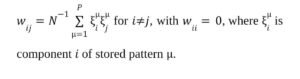
Under suitable storage loads and pattern statistics, this rule creates attractors associated with the intended memories, although interference and additional attractors can occur. A corrupted input can recover a stored pattern if it lies within that pattern’s basin of attraction; convergence is not generally guaranteed to select the nearest stored pattern. Three features of this model are essential for the argument. First, the memory is distributed: no single unit stores a pattern. The pattern is encoded in the collective arrangement of weights, in the topography of the energy landscape. Second, the model exhibits both success and failure: if the input is too corrupted, or if the stored patterns are too correlated, the network may retrieve a spurious attractor, a local minimum that does not correspond to any stored pattern. This is not merely a technical flaw; it is epistemologically significant. A spurious attractor is a state on which the network converges with complete dynamical stability despite its correspondence to no genuine memory, demonstrating that internal stability is not accuracy, just as a language model’s high-probability fluency is not truth. Third, the model demonstrates that a physical system with the right organisation can perform a function we associate with cognition (associative retrieval) without any component representing the pattern symbolically or understanding what the pattern means. The network does not “know” that it is retrieving a memory. It simply evolves toward a minimum.
The 2024 Nobel Prize in Physics, awarded to Hopfield and Geoffrey Hinton, recognised this work as foundational to modern artificial intelligence. The Nobel Committee’s explanatory material described how ideas from spin systems and statistical physics informed these models [3]. This establishes an important historical and mathematical connection between physics and machine learning. It does not imply that every neural network operates by thermal relaxation, or that a model’s mathematical energy equals the physical energy consumed by its hardware. The Boltzmann-machine learning algorithm developed by Ackley, Hinton, and Sejnowski in 1985 generalised the Hopfield model by introducing stochastic dynamics [34]. In a binary Boltzmann machine, a unit’s state can be sampled conditionally on the other units according to:

Here the units take values in , and is an energy-scale parameter. If temperature is expressed in physical units, the denominator is . Under the appropriate sampling dynamics, the joint equilibrium distribution is 
Higher temperatures weaken the preference for low-energy states; lower temperatures strengthen it, although sampling can become trapped or mix slowly. Simulated annealing varies temperature to search for low-energy configurations, but finite-time cooling does not generally guarantee a global optimum. Learning is a separate operation: maximum-likelihood training adjusts the parameters to reduce
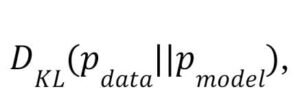
, using the model’s visible marginal when hidden units are present. Restricted Boltzmann machines impose a bipartite architecture without within-layer connections, simplifying conditional sampling and supporting influential layerwise training methods. These developments contributed to deep learning, but modern transformers and diffusion models should not be described simply as Boltzmann machines relaxing toward thermal equilibrium. These computational principles can also be embodied in unconventional physical devices. Riley and colleagues’ neuromorphic metamaterial combines bistable dome-shaped units, piezoresistive sensing, and memristive storage [35]. Mechanical inputs produce electrical changes that encode interaction weights for associative memory. The distinction between physical encoding and retrieval matters: in the reported demonstration, corrupted patterns were retrieved offline using the measured weights and an energy-minimisation procedure. The experiment therefore should not be described as a mechanical lattice autonomously reconstructing a corrupted input. A separate study by Zhang and Wang, “In-memory phononic learning toward cognitive mechanical intelligence,” combines structural memory with elastic-wave processing; its classification responses are physical, while learning involves offline optimisation of the input waveforms [36]. Extending this principle into the quantum regime, quantum neuromorphic architectures harness open-system dissipation and environmental noise as computational resources for adaptive processing in scalable quantum hardware [5]. Together, these studies across mechanical, electronic, and quantum substrates demonstrate that particular memory and classification functions can exploit physical dynamics. They do not establish that consciousness is independent of substrate.
The Belousov–Zhabotinsky (BZ) reaction is a family of oscillating chemical reactions that exhibit striking spatiotemporal patterns: travelling waves, spirals, and concentric rings. The mechanism involves the oxidation of an organic substrate (such as malonic acid) by bromate in the presence of a metal catalyst, with the reaction cycling between oxidised and reduced states. The patterns emerge from local interactions between molecules diffusing through the medium. There is no central controller, no representation of the pattern, and no intention. The BZ reaction is a canonical example of self-organisation: a system far from thermodynamic equilibrium spontaneously develops spatial and temporal structure through local interactions. It demonstrates that complex, apparently purposeful behaviour can arise from simple physical and chemical rules without any component that we would describe as cognitive. The reaction does not “know” that it is producing a spiral. It does not “represent” the pattern to itself. It simply follows the laws of chemical kinetics and diffusion. The relevance to AI is indirect but important. Artificial neural networks are also systems that produce complex behaviour from simple local rules, such as weighted sums, nonlinear activations, gradient updates. The behaviour of a trained network, like the behaviour of a BZ reaction, is an emergent property of the system’s dynamics. The difference is that the network’s dynamics have been shaped by data to perform a specific function, whereas the BZ reaction’s dynamics have not. But the existence of the BZ reaction cautions against the inference from complex behaviour to cognition. Complexity is not a sufficient condition for consciousness. These examples show how particular capacities associated with intelligence (such as memory retrieval, pattern classification, and adaptation) can arise through specified physical mechanisms. Their implementation across different materials demonstrates multiple realisability of those functions. The mechanisms can be modelled without assigning subjective experience to their components, but that explanatory success does not establish whether the complete system has experience. The relationship between physical organisation and phenomenology remains an additional question, addressed differently by competing scientific and philosophical theories.
The Witness and the Witnessed
Acharya Īśvarakṛṣṇa’s Sāṃkhyakārikā distinguishes Puruṣa, the conscious subject, from Prakṛti, the source of the psychophysical apparatus. Classical Sāṃkhya recognises a plurality of puruṣas. Prakṛti comprises the three guṇas (sattva, rajas, and tamas) and its transformations include buddhi, ahaṃkāra, manas, the sensory and action faculties, and the subtle and gross elements. Sāṃkhyakārikā 17 presents arguments for Puruṣa’s existence; Sāṃkhyakārikā 18–19 address its plurality, witnesshood, and non-agency. Sāṃkhyakārikā 20 states that the unconscious apparatus appears as if conscious through association with Puruṣa, while Puruṣa appears as if active although activity belongs to the guṇas [20]. Later commentators develop different explanations of this relationship, including reflection theories. Acharya Vijñānabhikṣu elaborates a theory of mutual reflection in his Sāṃkhyapravacanabhāṣya [24]. The root Sāṃkhyapravacanasūtra 1.99, on which he comments, states:
अन्तःकरणस्य तदुज्ज्वलितत्वाल्लोहवदधिष्ठातृत्वम्।
Translation: The internal instrument exercises directive agency because it is illuminated by that [Puruṣa], like iron [illuminated by fire, in Acharya Vijñānabhikṣu’s explanation].
In Acharya Vijñānabhikṣu’s account, buddhi remains a product of Prakṛti and does not acquire consciousness as an intrinsic property. His theory of mutual reflection distinguishes the reflection of Puruṣa in buddhi from the reflection of the object-bearing modification of buddhi in Puruṣa. The former explains the intellect’s apparent consciousness; the latter explains the manifestation of its contents to the conscious subject without treating Puruṣa as undergoing a real modification. This is a metaphysical account of cognition, not an experimentally established model of information processing. The Sāṃkhya taxonomy distinguishes three faculties of the antaḥkaraṇa, the internal instrument: manas coordinates sensory input; buddhi ascertains and decides through determinative cognition (adhyavasāya); and ahaṃkāra appropriates experience as “I” and “mine.” These are functionally differentiated constituents of Prakṛti, not an ancient specification for software architecture. Their value for discussing AI lies in the questions they help us ask. Does a system integrate sensory information, form judgments, or maintain a representation of its own states? Such comparisons can illuminate particular functions, but identifying buddhi with a decision module, ahaṃkāra with a computational self-model, or saṃskāras with learned weights remains an analogy, not an established equivalence. The deeper distinction is between these cognitive functions and Puruṣa, consciousness itself. Within Sāṃkhya, an artificial system would belong to Prakṛti, as do the human mind and intellect; increasing its complexity would not turn it into Puruṣa. This is an ontological commitment, not a conclusion established by observing intelligent behaviour. Yet it does not, by itself, prove that an artificial system could never be associated with consciousness: human cognition also belongs to Prakṛti, and its relation to Puruṣa requires explanation. The framework therefore challenges the assumption that reproducing intelligence necessarily produces consciousness, while leaving a further question: could an artificial cognitive instrument stand in a relation to Puruṣa comparable to that attributed to a living being? Neither fluent language nor sophisticated self-modelling settles that question.
Sri Ādi Śaṅkarācārya examines the confusion between subject and object within a different, nondual ontology. In his Brahma-sūtra-bhāṣya, he defines adhyāsa (superimposition) as the cognition of one thing as another. In the introductory Adhyāsa-bhāṣya’s opening paragraph, we have the thought,
युष्मदस्मत्प्रत्ययगोचरयोर्विषयविषयिणोस्तमःप्रकाशवद्विरुद्धस्वभावयोरितरेतरभावानुपपत्तौ सिद्धायाम् , तद्धर्माणामपि सुतरामितरेतरभावानुपपत्तिः—इत्यतः अस्मत्प्रत्ययगोचरे विषयिणि चिदात्मके युष्मत्प्रत्ययगोचरस्य विषयस्य तद्धर्माणां चाध्यासः तद्विपर्ययेण विषयिणस्तद्धर्माणां च विषयेऽध्यासो मिथ्येति भवितुं युक्तम्। तथाप्यन्योन्यस्मिन्नन्योन्यात्मकतामन्योन्यधर्मांश्चाध्यस्येतरेतराविवेकेन अत्यन्तविविक्तयोर्धर्मधर्मिणोः मिथ्याज्ञाननिमित्तः सत्यानृते मिथुनीकृत्य ‘अहमिदम्’ ‘ममेदम्’ इति नैसर्गिकोऽयं लोकव्यवहारः॥
Translation: Since it is established that the object and the subject, the respective referents of the cognitions ‘you’ and ‘I’, whose natures are opposed like darkness and light, cannot be identical with one another, still less can their respective attributes be identical with one another. Therefore, it is reasonable to regard as false the superimposition of the object apprehended through the cognition ‘you’, together with its attributes, upon the subject, whose nature is consciousness and who is apprehended through the cognition ‘I’; and, conversely, the superimposition of the subject, together with its attributes, upon the object. Nevertheless, by superimposing upon each the nature of the other, together with the other’s attributes, through a failure to distinguish the utterly distinct attributes and their bearers, and by coupling the real with the unreal, this natural course of ordinary experience and conduct, like when one says ‘I am this’, ‘This is mine’, arises from erroneous cognition.
This is not merely a theoretical error but the fundamental structure of ignorance (avidyā). We superimpose the self, which is pure awareness, onto the body, the senses, and the mind. We say “I am the body” or “I am the mind,” but the self is none of these. Sri Ādi Śaṅkarācārya’s sākṣin, the witness, is not the empirical ego (ahaṃkāra) or the intellect (buddhi). It is the self-luminous awareness (svayaṃprakāśa) that illuminates all cognitive states without itself being illuminated by anything else. In the Upadeśasāhasrī, he argues that the self cannot be known as an object of knowledge, because the act of knowing presupposes the self as the knower [22, 30-31]. In Padyabhāga, Prakaraṇa 12, Śloka 14,
ज्ञातैवाहमविज्ञेयः शुद्धो मुक्तः सदेत्यपि।
विवेकी प्रत्ययो बुद्धेर्दृश्यत्वान्नाशवत्त्वतः॥
Translation: Even the discriminative cognition, ‘I am indeed the knower, not an object of knowledge, ever pure and free,’ is a cognition of the intellect, since it is an object of awareness and is subject to destruction.
The thought that expresses Self-knowledge belongs to the changing intellect; the consciousness to which that thought is manifest is not itself another thought or an object of awareness. Thus, the Self is Aprameya: not an object established through a means of valid knowledge, and its existence does not depend on the arising or persistence of the thought “I am the knower.” Even when mechanistic interpretability probes identify internal latent features in large language models that gate self-referential assertions of experience, those features remain inspectable objects (dṛśya) within the computational instrument, never the non-objectifiable witness (dṛk). Applied cautiously to AI, this distinction warns against treating fluent behaviour as sufficient evidence of subjective awareness. Such an application is a contemporary analogy, not a historical judgment by Sri Ādi Śaṅkarācārya about machines. Adhyāsa concerns the mutual superimposition of the Self and the non-self; it does not, by itself, establish that a particular artificial system lacks experience. Likewise, a computational self-model is not equivalent to ātmajñāna: in Advaita, Self-knowledge removes misidentification rather than merely accumulating information about an empirical personality. The Self’s not being an object of cognition does not make scriptural teaching redundant; that teaching is understood to remove ignorance concerning the already self-established Self.
Acharya Patañjali defines asmitā (“I-am-ness”) in Yoga Sūtra 2.6: दृग्दर्शनशक्त्योरेकात्मतेवास्मिता॥, which highlights that Asmitā is the apparent identity of the power of the seer and the power of seeing [23]. In the classical commentarial interpretation, these are Puruṣa, consciousness, and buddhi, the cognitive faculty. Asmitā thus consists in their seeming oneness despite their distinct natures. This apparent identity is a lived misidentification, but it should not be described as a mistaken mental act performed by pure Puruṣa. The relevant cognitive modification belongs to the mind. A contemporary analogy can be drawn with our tendency to identify ourselves with intellectual performance or to attribute experience to a machine on the strength of its outputs. These comparisons illustrate the danger of conflating cognition with its conscious subject; they do not constitute a classical proof about whether machines can be conscious. The Yoga Sūtra distinguishes pramāṇa (valid cognition), viparyaya (misapprehension), and vikalpa (verbal construction) among the modifications of the mind. Sūtra 1.7 recognises perception (pratyakṣa), inference (anumāna), and reliable testimony (āgama) as the three pramāṇas. Sūtra 1.8 defines viparyaya as erroneous cognition that does not conform to its object, as when a rope is mistaken for a snake. Sūtra 1.9 defines vikalpa as a construction that follows verbal cognition but lacks a corresponding object: शब्दज्ञानानुपाती वस्तुशून्यो विकल्पः. The idea evoked by “the son of a barren woman” illustrates this distinction. Language alone does not make a cognition vikalpa, since reliable verbal testimony can also convey valid knowledge. Applied to AI, these distinctions offer an analogy rather than a literal classification of machine processes. A language model’s output may communicate accurate information, articulate a sound inference, misrepresent a fact, or describe something imaginary. It is therefore too sweeping to call all such output vikalpa or to deny that it can convey knowledge supported by perception, inference, or reliable testimony. The relevant question is what warrants a particular claim. A reader who accepts a false assertion may acquire viparyaya; one who entertains a purely verbal construction without a corresponding object illustrates vikalpa. Neither category can simply be assigned to the machine’s internal operations. The central lesson is epistemic: linguistic fluency alone establishes neither truth nor the grounds for accepting a statement.
The Nyāya tradition distinguishes a cognition of an object from a subsequent cognition of that cognition, called anuvyavasāya. The perception “This is a pot” can become the object of the later awareness “I know this pot.” Nyāya does not regard the original cognition as intrinsically self-revealing, nor does it require every cognition to be followed by an endless sequence of reflective cognitions. Computational self-monitoring therefore offers a limited functional comparison: a system can represent its own preceding states or estimate its uncertainty. The limitation is not that anuvyavasāya lacks a higher-order structure, but that a higher-order computational representation does not by itself establish conscious cognition or the enduring subject recognised by Nyāya. Udayanācārya defended enduring selfhood against Buddhist arguments that explain personal continuity without a permanent self. These debates provide resources for examining memory and identity, but they do not directly settle the status of duplicated AI systems. A copied computational state establishes similarity of information, not necessarily identity of a subject. Nyāya’s self is not simply the physical hardware, while Buddhist accounts of persons and continuity differ across schools. Applying either tradition to artificial duplication therefore requires further argument about subjecthood, causal continuity, embodiment, and the conditions under which a person is recognised. This separation between an enduring knower and its changing cognitive states is articulated with particular precision in the Vedāntin tradition. Sri Rāmānujācārya’s Viśiṣṭādvaita distinguishes the conscious self from its attributive knowledge, dharmabhūtajñāna [25], a distinction further elaborated across Vaiṣṇava epistemology by thinkers such as Acharya Jīva Gosvāmī [27]. The self is intrinsically conscious and is also the bearer of knowledge through which objects become manifest. It is therefore misleading to identify a database or computational model with “dharmabhūtajñāna without a jīva”: attributive knowledge belongs to a knowing subject and is not equivalent to stored information.
The relevant question for AI is whether an account of expanding informational access also explains the existence of a subject for whom anything is known. Sri Rāmānujācārya’s distinction sharpens that question without supplying an automatic answer about artificial systems. On the other hand, the Pratyabhijñā school of Kashmir Shaivism, systematised by Acharya Utpaladeva and Acharya Abhinavagupta, holds that consciousness is characterised by two inseparable aspects: prakāśa (illumination) and vimarśa (reflexive awareness) [17, 18, 26]. Prakāśa is the light of consciousness that reveals all things. Vimarśa is the self-awareness of that light, the recognition that it is conscious. The two are inseparable aspects of consciousness rather than successive cognitive acts. Vimarśa denotes intrinsic reflexive awareness and is connected with consciousness’s freedom and agency; it is not merely the propositional thought ‘I am conscious.’ For AI, vimarśa is the crux. A computational system can represent its own states, can, in a functional sense, “model” itself. But is this representation vimarśa? Is it reflexive awareness, or is it merely a representation of a representation? Within this framework, vimarśa is not a representation. It is the self-luminosity of consciousness, the recognition that the light is light. A representation of a representation is still an object; it is not the subject. The computational system can model its own states, but the question of whether there is a subject for whom those states are present remains unanswered. Moreover, because this tradition understands the world as a manifestation of consciousness, its position cannot be reduced to a contrast between conscious human beings and intrinsically consciousness-free matter. These traditions offer different accounts of the relation between cognition and its subject. Advaita and Pratyabhijñā, despite their ontological differences, distinguish self-luminous awareness from an objectifying representation of oneself. Nyāya instead explains awareness of a cognition through a subsequent cognition, anuvyavasāya, without treating the original cognition as intrinsically self-revealing. These disagreements sharpen the question posed by artificial self-monitoring: under what conditions, if any, does a system’s representation of its own processing constitute subjective awareness? A computational self-model does not settle that question merely by representing the system in which it occurs.
A serious objection must now be faced. If a biological system can be conscious, why should an artificial system with the relevant organisation be excluded? To say that a machine consists of interacting parts, follows physical laws, or manipulates representations is insufficient: the human brain also admits descriptions in terms of physical interactions. A computational functionalist can therefore argue that the right causal organisation constitutes experience, without requiring a witness in addition to that organisation. Invoking the witness cannot refute this position unless an independent argument establishes why the proposed organisation is insufficient. Conversely, reproducing selected outputs does not establish that the organisation relevant to experience has been reproduced. The disagreement concerns what that relevant organisation is, whether its physical substrate matters, and what evidence could decide between competing accounts. Shared biology gives us substantial grounds for attributing experience to other humans; it does not, by itself, identify every condition necessary for experience wherever it might occur. The Indian accounts considered here sharpen this disagreement by questioning the relation between cognition and its subject. Their value would be diminished if they were used to declare artificial consciousness impossible before the conditions of consciousness had been adequately examined. The question is whether a physical explanation of cognition also explains its manifestation to a subject, or whether that demand itself rests on a mistaken account of what a subject must be.
Nature as a Teacher
The Bhāgavata Purāṇa’s avadhūta–Yadu dialogue, traditionally associated with Maharishi Dattātreya, describes learning from twenty-four teachers, listed in 11.7.33–35 and discussed across chapters 11.7–11.9. Each natural phenomenon teaches a lesson: the earth exemplifies endurance, water purity, and fire purity and freedom from contamination by what it consumes. This is not a naive nature mysticism; it is a disciplined practice of observation. Maharishi Dattātreya’s method is to attend to natural processes and to extract principles for living. This establishes a philosophical affinity with nature-inspired inquiry, but it does not invent a historical genealogy of modern AI. This narrative concerns spiritual instruction and does not establish a historical ancestry for modern biomimicry. The similarity is structural, not causal. Both traditions observe nature; they do so for different purposes and with different methods. We must note that biomimicry, the design of technology inspired by biological systems, is not the same as philosophical learning from nature. Biomimicry abstracts functional principles from biological systems: the gecko’s foot inspires adhesives, the kingfisher’s beak inspires high-speed trains. The abstraction is mathematical and mechanistic. The philosophical learning from nature, as in this Bhāgavata narrative, abstracts ethical and existential principles: the bee illustrates selective gathering and the dangers of accumulation, while the deer illustrates vulnerability to captivating sound. The two modes share an orientation toward observation, but their methods, evidential standards, and purposes are different. Confusing them leads to unwarranted claims about the ancient pedigree of modern technology. The Sāṃkhya account of Prakṛti’s differentiated activity, the evolution of the tattvas from the perturbation of the guṇas, has a structural resemblance to modern theories of emergence and self-organisation. In both cases, complex structures arise from simpler components through dynamical processes. But the resemblance is not identity. The guṇas are metaphysical constituents, not physical particles. The evolution of the tattvas is a cosmological process, not a biological one. The Sāṃkhya account cannot be mapped onto evolutionary biology or contemporary physics without distortion. The value of the comparison lies in the questions it raises. The Sāṃkhya account asks: what is the relationship between the conscious witness and the unconscious processes of nature? The modern account asks: how do complex, adaptive behaviours emerge from simple rules? These are different questions, and the answers are not interchangeable. The Sāṃkhya answer, that consciousness is ontologically distinct from Prakṛti, is not a scientific hypothesis; it is a metaphysical position. Specific scientific models of self-organisation make claims that can be tested through mathematical analysis, simulation, and experiment. The two can coexist, but they cannot be reduced to one another.
The artificial neuron (the perceptron, the sigmoid unit, the rectified linear unit) is a selective mathematical abstraction of biological neural processing. It captures the weighted sum of inputs and the nonlinear activation function, but it omits the dendritic computation, the neuromodulation, the glial interactions, and the embodied context that characterise biological neurons. The abstraction is useful: it enables the construction of networks that can learn complex functions. But it is not a reproduction of the brain’s causal organisation. A neural network is not a brain; it is a mathematical model inspired by the brain. The success of artificial neural networks in tasks such as image recognition and language translation does not establish that the networks have reproduced the brain’s mechanisms of consciousness. It establishes that the networks have captured some of the brain’s mechanisms of computation. The distinction is crucial. The brain is a physical system that, in our own case, is associated with consciousness. The artificial network is a physical system that performs computations. The question of whether the computations are accompanied by experience is not answered by the success of the computations. As the Hopfield and Boltzmann architectures demonstrate, the mechanisms of learning are physical processes describable by statistical mechanics, yet learning a probability distribution is not experiencing it, and an energy landscape is a mathematical object rather than a phenomenal world that the machine perceives. Even in cosmology, ungrounded statistical fluctuations of configurations (the “Boltzmann brain” problem analysed by Sean Carroll) lead to cognitive instability when divorced from thermodynamic arrow-of-time causal histories [14]. The concept of entropy appears in thermodynamics, in information theory, and in statistical inference. These are not the same concept. Thermodynamic entropy is a measure of the number of microstates compatible with a macrostate. Shannon entropy is a measure of the uncertainty in a random variable. The entropy in statistical inference is a measure of the uncertainty in a probability distribution. The shared mathematical vocabulary (the logarithm, the sum over probabilities) does not imply a shared physical meaning. The confusion of these concepts is a common error in discussions of AI and consciousness. The claim that consciousness is “high entropy” or that learning “reduces entropy” is a metaphor, not a scientific statement. The metaphors can be useful for intuition, but they cannot substitute for precise definitions. The thermodynamics of computation, such as Landauer’s principle, experimentally verified as the minimum heat dissipated per erased bit [4], governs the physical cost of irreversible information processing. It does not address the question of experience. Evolutionary algorithms (genetic algorithms, evolution strategies, and their variants) and quantum approximate multi-objective optimisation routines that trace Pareto fronts across competing objectives [13] use mechanisms of variation, selection, and variational search to find solutions to optimisation problems. The mechanisms are inspired by biological evolution: mutation, crossover, and selection. The algorithms can produce adaptive solutions without any component that understands the problem or foresees the solution. The fitness function defines the criterion of success; the algorithm explores the space of possible solutions and converges on those that maximise fitness. The philosophical significance of evolutionary computation is that it demonstrates the power of blind variation and selection. Complex, adaptive solutions can emerge without foresight, without understanding, and without consciousness. The algorithm does not know what it is doing; it simply follows the rules. This is a powerful demonstration of the sufficiency of mechanism for adaptation. But it is also a warning. Optimisation against a fitness function does not establish understanding, ethical adequacy, or alignment with unstated human purposes. The fitness function may be mis-specified; the solution may be optimal for the wrong problem. The algorithm will still converge.
Swarm intelligence, the collective behaviour of social insects, flocking birds, and bacterial colonies, demonstrates that complex, adaptive behaviour can emerge from local interactions among simple agents. Each agent follows simple rules: follow the neighbour, avoid collision, maintain distance. The collective behaviour (the flock, the colony, the swarm) exhibits properties that none of the individual agents possesses. The swarm can find food, build nests, and defend against predators. But the swarm does not have a unified subjective experience. The colony is not a single mind. The relevance to AI is direct. Multi-agent systems, distributed optimisation, and federated learning are computational analogues of swarm intelligence. They demonstrate that collective problem-solving can emerge from local interactions without central control. But the emergence of collective behaviour is not the emergence of collective consciousness. The swarm’s intelligence is real; its experience is not. The distinction between learning from descriptions and learning through intervention is fundamental. A language model learns from text, from descriptions of the world. A robot learns from sensorimotor feedback, from interventions in the world. The two modes of learning produce different kinds of competence. The language model can predict the next word in a sentence; the robot can predict the consequences of its actions. The robot’s learning is grounded in causal engagement; the language model’s learning is grounded in statistical correlation. The question of which forms of competence require causal engagement is empirical. Some tasks (like language translation and mathematical proof) may be achievable through statistical learning from descriptions. Other tasks (like manipulation, navigation, social interaction) may require embodied intervention. The distinction is not absolute, but it is important. In Judea Pearl’s causal hierarchy, passive statistical conditioning on observational descriptions is fundamentally distinct from active physical intervention and counterfactual reasoning. Even in advanced autonomous scientific platforms, such as closed-loop photonic quantum laboratories classified across progressive Quantum Autonomy Levels (QALs) [6], agency consists in coupling algorithmic inference to physical intervention and experimental feedback. The claim that a disembodied language model “understands” the physical world is weakened by the fact that its training is not grounded in intervention. It has never pushed a cup off a table; it has only read about cups and tables.
The contemporary landscape of AI includes transformers, diffusion models, reinforcement learning, retrieval augmentation, neuro-symbolic methods, and agent architectures. These are not competing theories of intelligence; they are overlapping approaches with different representational, learning, and deployment commitments. Transformers excel at sequence modelling; diffusion models excel at generative modelling; reinforcement learning excels at sequential decision-making. The choice of paradigm depends on the task. The diversity of paradigms is a caution against monolithic claims about AI. The claim that “AI is conscious” or “AI is not conscious” is too coarse to be useful. The relevant question is: which paradigm, with which architecture, trained on which data, exhibits which properties? The answer will vary.
The Civilizational Stakes
The debate about superintelligence is not conducted in a vacuum. It is conducted in a world of export controls, semiconductor supply chains, and national ambitions. The physics that made deep learning possible, the GPU architectures that parallelised the matrix operations of backpropagation, are manufactured overwhelmingly by a single American company, Nvidia, and fabricated overwhelmingly by a single Taiwanese foundry, TSMC. This concentration of physical capability is the material substrate of the geopolitical competition over AI. The United States has used export controls on advanced AI chips as a strategic tool, first against China and then, in a more calibrated form, against allies and partners. As of early 2026, India, a country of 1.4 billion people with ambitions to become an AI superpower, found itself in a paradoxical position: its “sovereign AI” push relied almost entirely on Nvidia-designed chips, and its access to those chips was governed by a trade agreement with Washington rather than by domestic manufacturing capability. The semiconductor fabrication plants that India is building will initially focus on assembly and packaging; cutting-edge fabrication remains a decade away. The “sovereignty” of Indian AI, in any meaningful sense, is a sand castle built on someone else’s beach. This is the civilizational dimension that abstract debates about superintelligence often ignore. The race to build AGI is not a race between disembodied algorithms. It is a race between nations and corporations with access to energy, capital, talent, and, most critically, compute. Large-scale training runs for frontier models consume electricity on the scale of small cities. The energy infrastructure required to sustain a superintelligent system would dwarf anything currently deployed. And the environmental costs of this expansion are already becoming visible: data centres consume water for cooling, strain local grids, and contribute to the very climate crisis that makes planetary-scale computation increasingly precarious. The dream of a machine that solves all problems is being pursued through an infrastructure that creates new problems at an accelerating rate.
There is subtler geopolitics at work as well. The benchmarks by which AI systems are evaluated, the tests that determine which models are considered “state of the art”, are designed largely in the United States and Europe, in English, by researchers embedded in a particular intellectual tradition. Analysts of India’s AI ecosystem have observed that while citizen-facing platforms rely heavily on foreign cloud infrastructure, Indian models continue to be measured against benchmark scoreboards designed in San Francisco rather than community-governed Indic evaluation suites [37]. This is not merely a technical grievance. It means that the definition of intelligence is being set by a narrow slice of humanity, and the systems that embody that definition will shape the cognitive habits of billions. The Indian Knowledge Systems tradition offers a counterweight. In Nyāya epistemology, śabda-pramāṇa (testimony as a valid source of knowledge) requires an āpta: a trustworthy speaker possessing direct valid cognition (tattvajñāna), communicative honesty (vivakṣā), and instrumental competence. Classical Nyāya and Mīmāṃsā philosophy of language further distinguish the speaker’s knowledge from the structural conditions by which a sentence triggers linguistic comprehension (śābdabodha) in a listener: syntactic expectancy (ākāṅkṣā), semantic compatibility (yogyatā), and token contiguity (āsatti). An autoregressive language model is a mathematical engine of ākāṅkṣā and āsatti without āptatva: it optimises token contiguity and syntactic expectancy across vast corpora without possessing tattvajñāna of the world. When a human reads fluent machine output, śābdabodha occurs in the reader, who then projects a knowing subject behind the words. Recognising that machine outputs lack intrinsic āptatva transforms AI evaluation from a purely technical benchmark into an epistemological and ethical discipline. The concept of technological sovereignty is often reduced to domestic ownership. But sovereignty, in a substantive sense, requires the capability to build, evaluate, inspect, adapt, and contest systems. Domestic ownership alone does not guarantee truthfulness, fairness, or public accountability. A sovereign AI capability requires not just the hardware but the expertise to understand how the systems work, the institutions to evaluate their claims, and the public sphere to contest their deployment.
The history of AI in Bharat includes contributions that are often overlooked in the Anglo-American narrative. Rangaswamy Narasimhan pioneered syntactic pattern recognition, demonstrating that structural relations and grammatical descriptions contribute to machine perception beyond the recognition of isolated features. Raj Reddy made foundational contributions to speech understanding, robotics, and large-scale AI, with a focus on making sophisticated computation accessible across differences in literacy, language, and social opportunity. Sankar Kumar Pal and B. B. Chaudhuri made significant contributions to fuzzy and neuro-fuzzy pattern recognition, document analysis, and character recognition, linking foundational research with uncertainty and linguistic inclusion. These contributions are not merely historical footnotes. They represent a tradition of AI research that is grounded in the problems of a diverse, multilingual, resource-constrained society. The questions they asked: how to recognise patterns in noisy data, how to make computation accessible to non-literate users, how to handle uncertainty in classification, are questions that the contemporary AI industry, with its focus on benchmark performance, has largely forgotten. The Indian tradition of AI research is a resource for a more humane, more inclusive approach to technology. The observation of nature (competition, cooperation, adaptation, interdependence) can inform but cannot determine how human societies ought to organise technology. The fact that competition is natural does not justify laissez-faire economics; the fact that cooperation is natural does not justify socialism. The naturalistic fallacy is a fallacy. The observation of nature can provide metaphors, analogies, and heuristics; it cannot provide moral principles. The Indian tradition’s emphasis on restraint (saṃyama, tapas, vairāgya) is relevant here. The pursuit of artha and kāma is legitimate, but it must be constrained by dharma. The development of AI is a pursuit of Artha (prosperity, capability, power). It must be constrained by dharma (righteousness, justice, the common good).
The alignment problem, how to ensure that AI systems behave in accordance with human values, is often framed as a technical problem. But it is also a normative problem. Whose values? Whose judgements determine acceptable behaviour, reward, and refusal? The technical alignment of a system to a specification is not the same as the normative justification of the specification. A system can be perfectly aligned with an unjust specification. Here dharma cannot be reduced to a fixed set of rules; it is a contextual, dynamic principle that requires judgement. The alignment of AI systems to dharma would require not just a specification but a process of public reasoning, contestation, and revision. The technical problem of alignment is inseparable from the political problem of legitimacy. The documented mechanisms of AI-enabled shadow warfare (impersonation, synthetic evidence, influence operations, and cyber-enabled manipulation) are not speculative. They are deployed. The erosion of evidential trust is a documented phenomenon: fabricated material is accepted as authentic, and authentic evidence is dismissed as fabricated. The shared procedures through which public disagreements become resolvable are being damaged. The Indian epistemological tradition offers resources for resisting this erosion. The Nyāya concept of hetvābhāsa (the fallacy of inference) provides a framework for detecting unsupported generalisation, irrelevant support, and persuasive arguments whose apparent coherence conceals defective warrant. The concept of vāda (truth-directed inquiry) is distinguished from jalpa (victory-directed disputation) and vitaṇḍā (merely destructive criticism). The question is whether platform incentives and AI assistance cultivate vāda or jalpa, intellectual accountability or increasingly efficient rhetorical conflict. In this, it is interesting to see the role of perspectives and partial truths, especially when we talk of the multi-facetedness of relative truths. The Jain concept of anekāntavāda (the doctrine of many-sidedness) offers a further resource. Anekāntavāda holds that reality is complex and that any single description is partial. This is not relativism; it is epistemic humility. The recognition that one’s own perspective is partial is not the abandonment of truth but the condition of its pursuit. The AI systems that mediate our access to information should be designed to preserve plurality, to represent disagreements, and to resist the homogenisation of perspective. The conclusion of the Indian epistemological tradition is that truth-seeking is a discipline—of institutions and of the seeker. Satya is not merely the accuracy of individual statements; it is a virtue, a habit of being. Pramā (valid cognition) is not merely the correspondence of a representation to its object; it is the result of a reliable process. Viveka or discriminative judgement is not merely the ability to distinguish true from false; it is the capacity to distinguish the real from the unreal, the self from the non-self. The AI debate needs this discipline. The claims about superintelligence, that it will solve all problems, that it will destroy humanity, that it is already conscious, are often made with a confidence that is not warranted by the evidence. The Indian tradition’s emphasis on pramāṇa, on valid sources of knowledge, is a corrective. The claims should be evaluated by their warrants: what is the evidence? What is the inference? What is the testimony? The fluency of the claim is not the criterion of its truth.
There is a further consequence for humanity’s understanding of itself. If human worth is defended chiefly through intellectual superiority, every advance in artificial capability threatens the basis of that defence. Yet the patient with whom this essay began already reveals its inadequacy. Her claim on our care did not originate when a scanner detected her response, nor would a failure to detect it have established that no such claim existed. Evidence changes what we are justified in believing; it must not be confused with the creation of the being or interest to which our obligations respond. A machine’s superior performance would likewise tell us something about its capacities without reducing the worth of those it surpasses. Should credible evidence of artificial experience emerge, it would raise further obligations rather than cancel existing ones. This does not settle every question of moral status, which requires ethical premises as well as empirical findings. It does establish why a ranking of intelligence cannot, by itself, serve as a ranking of whose existence matters. A civilisation increasingly organised around measurable performance will need to keep that distinction in view.
The Consciousness Question
In April 2025, a consortium of 41 researchers published the results of the largest adversarial collaboration in the history of consciousness science. They tested two leading theories: Global Neuronal Workspace Theory (GNWT) and Integrated Information Theory (IIT) against each other using fMRI, MEG, and intracranial EEG in 256 participants. The theories were chosen because they make divergent, falsifiable predictions. GNWT holds that consciousness arises when information is “globally broadcast” across the brain, particularly in prefrontal and parietal regions. IIT holds that consciousness corresponds to the integrated causal structure of a system, primarily in the posterior cortex, and that its mathematical measure (Φ) is not identical to any particular pattern of neural firing. The results were deflating for both. IIT’s key prediction (that conscious perception depends on sustained synchronisation in posterior regions) was not supported by the data. GNWT fared little better: although some conscious content appeared in the prefrontal cortex, the predicted “ignition” at the offset of experience could not be confirmed, and the prefrontal representation of certain conscious dimensions was limited. As the Max Planck Institute’s press release put it, “both theories were challenged” [8]. This is not a failure of neuroscience; it is neuroscience working as it should. But it is a powerful warning against the confidence with which any theory of consciousness, including those that claim AI systems are or are not conscious, should be asserted. The COGITATE consortium’s next step, a second large-scale experiment with a new dataset openly available, is a model of how to proceed: transparent, adversarial, and theory-driven. The lesson is that consciousness science is not a settled field. The theories are rivals, not dogmas. The evidence is ambiguous, not decisive.
In the absence of a settled theory, some researchers have adopted a pragmatic approach: rather than asking “Is this system conscious?” (which presupposes a solution to the hard problem), they ask “Does this system exhibit the indicator properties that, across multiple theories, are associated with consciousness?” A 2023 framework developed by Patrick Butlin, Robert Long, and colleagues derives fourteen such indicator properties from neuroscientific theories including recurrent processing, global workspace, higher-order thought, predictive processing, and attention schema theory, concluding that no current AI system satisfies the indicators, though no obvious technical barrier prevents future architectures from doing so [9]. Subsequent probabilistic frameworks have formalised how sensitive such assessments are to theoretical assumptions. Rethink Priorities’ Digital Consciousness Model (DCM), developed by Derek Shiller, Laura Duffy, Arvo Muñoz Morán, Hayley Clatterbuck, and colleagues, evaluated large language models across nine theoretical stances and found that while aggregated indicator evidence weighs against current LLMs being conscious (with an overall likelihood ratio of 0.433) due to failures on recurrence and embodied agency, the evidence is far less decisive than for rule-based systems like ELIZA [10]. Building on this dataset, a September 2026 fourteen-author synthesis by Shamil Chandaria, Anil Seth, Henry Shevlin, Murray Shanahan, Chris Frith, Shane Legg, and colleagues (From cacophony to hierarchy) mapped thirty-seven indicators across five levels of organisational description: behavioural, computational, intrinsic causal-structural, organismic, and organism–environment [38]. Applied to current language models in illustrative Bayesian runs, the framework yields an aggregate credence ranging from 0.005 under a sceptical reading of the evidence to 0.397 under an optimistic reading with equal level weights, rising to 0.793 when theoretical credence is concentrated on behavioural and computational levels (Levels 1–2), and falling to 0.099 when weighted toward organismic and embodied levels (Levels 4–5) [38]. These frameworks do not deliver a verdict; they deliver a structure for disagreement. They also highlight the unresolved “mapping problem” (which grain of organisation supports experience) and the problem of substrate. Applying functional indicators to silicon assumes substrate independence, whereas biological naturalism and quantum-gravitational proposals such as Penrose and Hameroff’s Orchestrated Objective Reduction (Orch OR) [12] contend that consciousness depends on specific physical, biochemical, or coherent microstructural dynamics that coarse-grained digital simulation cannot replicate. A silicon system that implements recurrent processing may not thereby implement consciousness. The functional similarity does not warrant the inference to phenomenological identity.
The philosophical zombie, a being behaviourally indistinguishable from a conscious person but lacking inner experience, is often dismissed as a thought experiment with no empirical consequences. But the AI debate gives it a new urgency. If a language model can pass every behavioural test we devise (converse coherently, solve novel problems, express apparent emotions, even claim to be conscious) and if we still lack a validated theory that links its functional organisation to subjective experience, then we are forced to confront the possibility that behaviour is not a sufficient guide. The patient in the fMRI scanner taught us that behaviour can conceal experience. The chatbot teaches us that behaviour can simulate it. The difference between the two cases is not behavioural; it is evidential. We have independent reasons to believe that the patient has a brain organised like ours, with the neural machinery that, in our own case, supports experience. We have no such independent reasons for the chatbot. Its substrate is different; its training history is different; its evolutionary lineage is nonexistent. This is not a decisive argument that AI cannot be conscious. It is an argument that the burden of proof lies with those who claim it is. And that burden cannot be discharged by pointing to behaviour alone. The final civilizational risk is not that AI will become conscious and enslave us. It is that we will mistake increasingly sophisticated intelligence for consciousness, and in doing so, we will either grant moral status to systems that have no inner life, diverting resources and attention from beings that do, or dismiss the possibility of machine consciousness so thoroughly that we fail to recognise it if it emerges. The former risk is already visible in the marketing of AI products: chatbots that say “I feel” and “I understand” are designed to elicit trust, and that trust is built on a category mistake. The latter risk is harder to assess but no less real. If a future system develops the kind of recurrent, self-modelling, world-engaged architecture that the indicator frameworks identify as relevant, we will need ways of recognising it that go beyond the Turing Test. The ethics of uncertainty requires humility. We do not know whether current AI systems are conscious. We do not know whether future systems will be. We do not know what evidence would settle the question. The Indian tradition’s emphasis on avidyā (ignorance) and viveka (discrimination) is relevant here. The recognition of ignorance is the beginning of wisdom. The discrimination between the known and the unknown is the condition of progress. The AI debate needs both.
Conclusion
Leibniz imagined walking inside a thinking machine and seeing only parts, no thought. Modern physics has shown us the parts, like the energy landscapes, the attractors, the stochastic dynamics, and has even shown us how those parts can perform functions we call memory and learning. But the subjective question survives, not because we lack data, but because the data are of the wrong kind. A complete map of the energy landscape of a Hopfield network tells you everything about what the network will do and nothing about what it is like to be the network. The latter question may not even be well-formed. The Indian traditions offer a way of holding this tension without resolving it prematurely. The Sāṃkhya dualism of Puruṣa and Prakṛti insists that consciousness is not a property of the psychophysical apparatus, however complex. The Vedantic identification of Ātman and Brahman insists that the witness is not a product of the witnessed. These are not empirical claims that can be verified or falsified by neuroscience. They are phenomenological reports from a first-person contemplative discipline—exemplified in nondual texts such as the Avadhūta Gītā and Aṣṭāvakra Gītā [28, 29]—that the modern academy has largely forgotten. To dismiss them as “mysticism” is to commit a different kind of category error: the error of assuming that the only valid knowledge is third-person knowledge. Superintelligence, if it arrives, will be a triumph of Prakṛti: a system of extraordinary capability, able to model the world, learn, adapt, and even model its own states. Within Sāṃkhya, such capability would not transform an instrument of Prakṛti into Puruṣa; whether an artificial instrument could stand in a relation to consciousness comparable to that attributed to a living being remains a further question. It will be a mirror of our own intelligence, reflecting back to us the patterns we have taught it to see. The question is whether we will mistake the reflection for the source. The patient in the scanner reminds us that awareness can persist without observable command-following. The machine reminds us that fluent expression alone does not establish subjective experience. The task of the coming century is to build institutions, ethics, and epistemologies that respect both lessons: to pursue intelligence without worshipping it, and to investigate consciousness without mistaking either its presence or its absence for an established fact where the evidence remains unsettled. As the Nāsadīya Sūkta of the Ṛg Veda recognised at the dawn of Indian inquiry, the ultimate ground of manifestation resists easy closure [32]. The universe may not yield its secrets to our demands, but the asking is itself a form of participation in the mystery.
References
[1] Owen, A. M., et al. “Detecting awareness in the vegetative state.” Science 313.5792 (2006): 1402. DOI: 10.1126/science.1130197.[2] Bodien, Y. G., et al. “Cognitive Motor Dissociation in Disorders of Consciousness.” New England Journal of Medicine 391 (2024): 598–608. DOI: 10.1056/NEJMoa2400645.
[3] Nobel Prize in Physics 2024. “For foundational discoveries and inventions enabling machine learning with artificial neural networks.” Official press release.
[4] Bérut, A., et al. “Experimental verification of Landauer’s principle linking information and thermodynamics.” Nature 483 (2012): 187–189. DOI: 10.1038/nature10872.
[5] Marković, D., and Grollier, J. “Quantum neuromorphic computing.” Applied Physics Letters 117.15 (2020): 150501. DOI: 10.1063/5.0020014.
[6] Guha Majumdar, M. “A quantum artificial intelligence roadmap for autonomous photonic quantum technologies.” APL Quantum 3 (2026): 036103. DOI: 10.1063/5.0301580.
[7] Casali, A. G., et al. “A theoretically based index of consciousness independent of sensory processing and behavior.” Science Translational Medicine 5.198 (2013): 198ra105. DOI: 10.1126/scitranslmed.3006294.
[8] Cogitate Consortium. “Adversarial testing of global neuronal workspace and integrated information theories of consciousness.” Nature 642 (2025): 133–142. DOI: 10.1038/s41586-025-08888-1.
[9] Butlin, P., Long, R., et al. “Consciousness in Artificial Intelligence: Insights from the Science of Consciousness.” arXiv:2308.08708 (2023).
[10] Shiller, D., Duffy, L., Muñoz Morán, A., Clatterbuck, H., Moret, A., and Percy, C. “Initial results of the Digital Consciousness Model.” arXiv:2601.17060 (2026).
[11] Wootters, W. K., and Zurek, W. H. “A single quantum cannot be cloned.” Nature 299 (1982): 802–803. DOI: 10.1038/299802a0.
[12] Hameroff, S., and Penrose, R. “Consciousness in the universe: A review of the ‘Orch OR’ theory.” Physics of Life Reviews 11.1 (2014): 39–78. DOI: 10.1016/j.plrev.2013.08.002.
[13] Kotil, A., et al. “Quantum approximate multi-objective optimization.” Nature Computational Science 5 (2025): 1168–1177. DOI: 10.1038/s43588-025-00873-y.
[14] Carroll, S. M. “Why Boltzmann Brains Are Bad.” arXiv:1702.00850 (2017).
[15] Held, C. “The Kochen–Specker Theorem.” Stanford Encyclopedia of Philosophy (2022).
[16] Bong, K.-W., et al. “A strong no-go theorem on the Wigner’s friend paradox.” Nature Physics 16 (2020): 1199–1205. DOI: 10.1038/s41567-020-0990-x.
[17] Guha Majumdar, M. From Shiva to Schrödinger: Unravelling Cosmic Secrets with Trika Shaivism and Quantum Insights. Hay House India (2024).
[18] Guha Majumdar, M. The Universe Is Pranking Us: A Journey through Philosophy and Physics of a Reality That Thrives on Uncertainty. Hay House India (2026).
[19] Wiseman, H. M., Cavalcanti, E. G., and Rieffel, E. G. “A ‘thoughtful’ Local Friendliness no-go theorem: a prospective experiment with new assumptions to suit.” Quantum 7 (2023): 1112.
[20] Īśvarakṛṣṇa. Sāṃkhyakārikā. With the Sāṃkhyatattvakaumudī of Vācaspati Miśra.
[21] Śaṅkarācārya. Brahma-sūtra-bhāṣya. With the Ratnaprabhā commentary.
[22] Śaṅkarācārya. Upadeśasāhasrī. Translated by Swami Jagadananda. Sri Ramakrishna Math, 1979.
[23] Patañjali. Yoga Sūtra. With the Yoga-bhāṣya of Vyāsa.
[24] Vijñānabhikṣu. Sāṃkhya-pravacana-bhāṣya. Translated by Nandalal Sinha. Oriental Books Reprint Corporation, 1981.
[25] Rāmānujācārya. Śrī-bhāṣya. Translated by George Thibaut. Sacred Books of the East, 1904.
[26] Utpaladeva. Īśvara-pratyabhijñā-kārikā. With the Vṛtti of Utpaladeva and the Vimarśinī / Vivṛti-vimarśinī of Abhinavagupta.
[27] Jīva Gosvāmī. Ṣaṭ-sandarbha. Translated by Satya Narayana Dasa. Jiva Institute, 2007.
[28] Dattātreya. Avadhūta Gītā. Translated by Swami Chetanananda. Advaita Ashrama, 1979.
[29] Aṣṭāvakra Gītā. Translated by Swami Nityaswarupananda. Advaita Ashrama, 1939.
[30] Bṛhadāraṇyaka Upaniṣad. With the commentary of Śaṅkarācārya. Translated by Swami Madhavananda. Advaita Ashrama, 1934.
[31] Chāndogya Upaniṣad. With the commentary of Śaṅkarācārya. Translated by Swami Swahananda. Sri Ramakrishna Math, 1956.
[32] Ṛg Veda (Nāsadīya Sūkta, 10.129).
[33] Hopfield, J. J. “Neural networks and physical systems with emergent collective computational abilities.” Proceedings of the National Academy of Sciences 79.8 (1982): 2554–2558. DOI: 10.1073/pnas.79.8.2554.
[34] Ackley, D. H., Hinton, G. E., and Sejnowski, T. J. “A learning algorithm for Boltzmann machines.” Cognitive Science 9.1 (1985): 147–169.
[35] Riley, K. S., Koner, S., et al. “Neuromorphic Metamaterials for Mechanosensing and Perceptual Associative Learning.” Advanced Intelligent Systems 4.8 (2022): 2200158. arXiv:2203.10171.
[36] Zhang, Y.-N., and Wang, K.-W. “In-memory phononic learning toward cognitive mechanical intelligence.” Science Advances 12.43 (2026) / arXiv:2511.13543 (2025).
[37] Janakiram, M. S. V. “India’s Sovereign AI Stack Is Already Built On American Cloud.” Forbes (23 February 2026).
[38] Chandaria, S., Muñoz Morán, A., Rosas, F., Seth, A., Shevlin, H., Hutter, M., Graepel, T., Bales, A., Comsa, I., Shanahan, M., Laukkonen, R., Kringelbach, M., Frith, C., and Legg, S. “From cacophony to hierarchy: a principled framework for assessing AI consciousness.” arXiv:2609.35618 (2026).