IKS Teaching
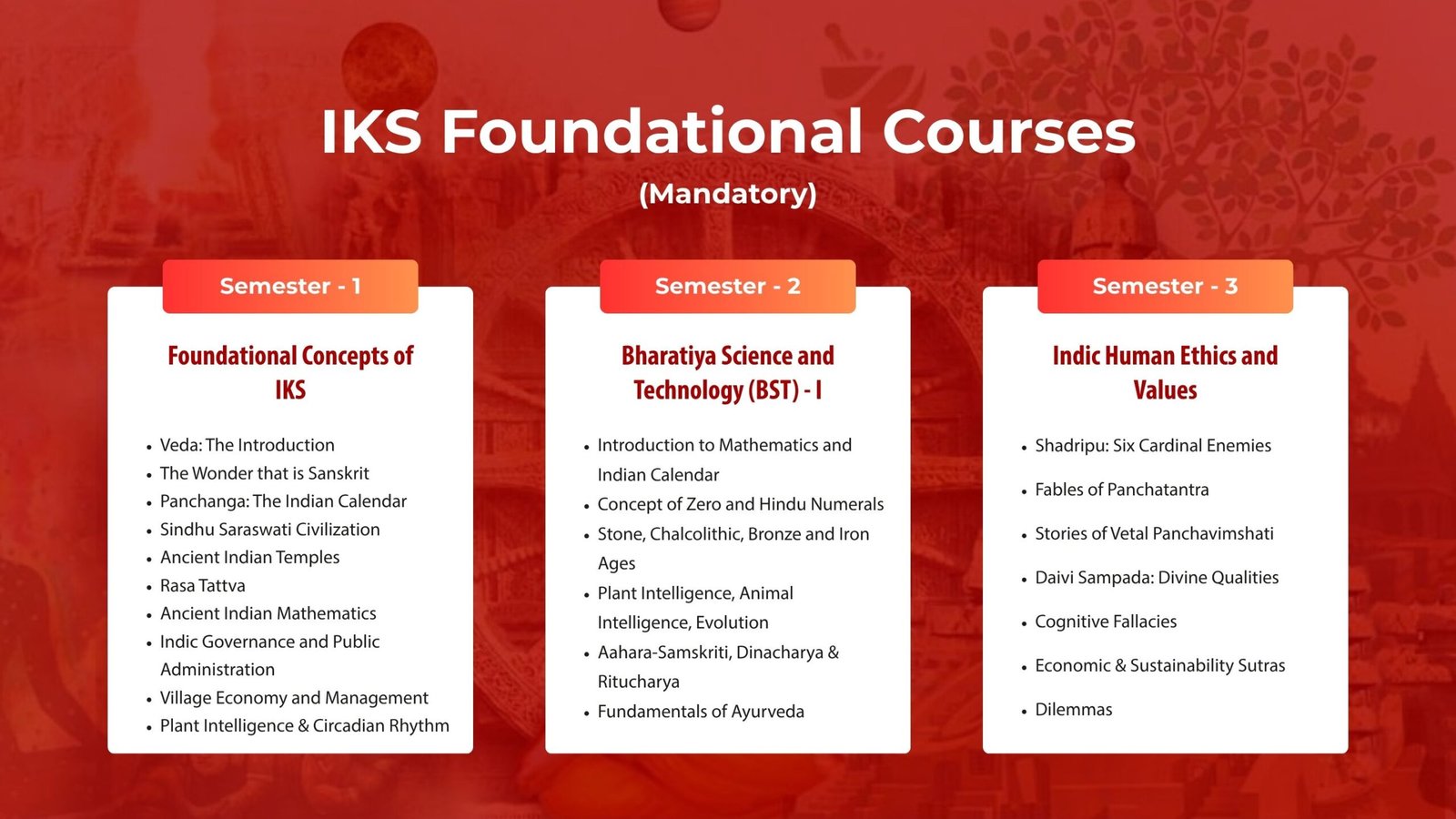
Each year, the Centre for Indic Studies at Indus University undertakes a large-scale and systematically structured teaching of Indian Knowledge Systems (IKS) across multiple disciplines and programmes. Based on institutional data, the Centre reaches a wide academic base through a combination of mandatory courses, value-added components, and elective tracks, engaging students from B.Tech, B.Sc., BBA, B.Com, and other professional and interdisciplinary programmes. Every year, we teach IKS as a mandatory subject to 3000 students who enrol in the first semester and offer elective minor courses to over 5000 students in the remaining semesters.
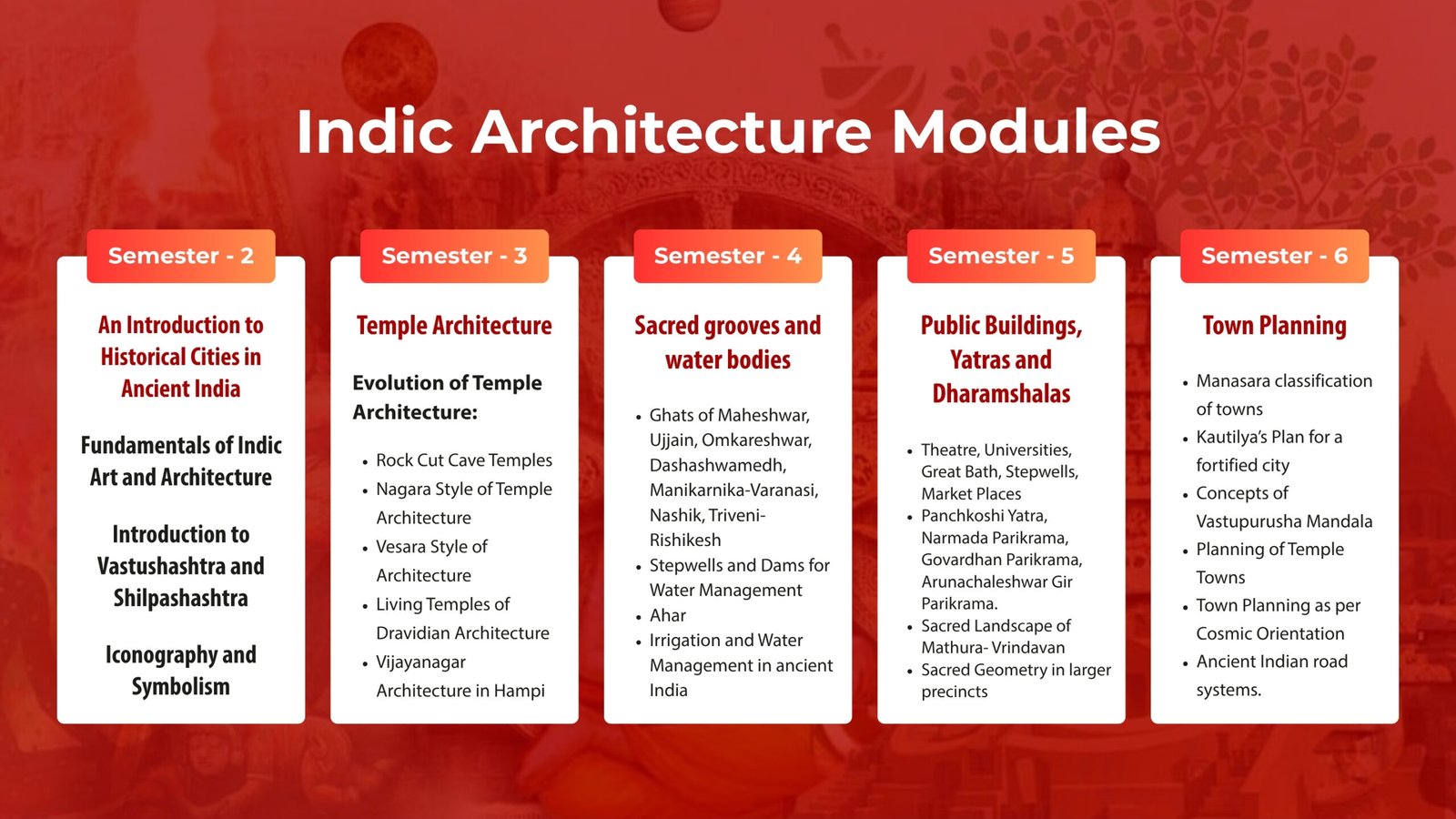
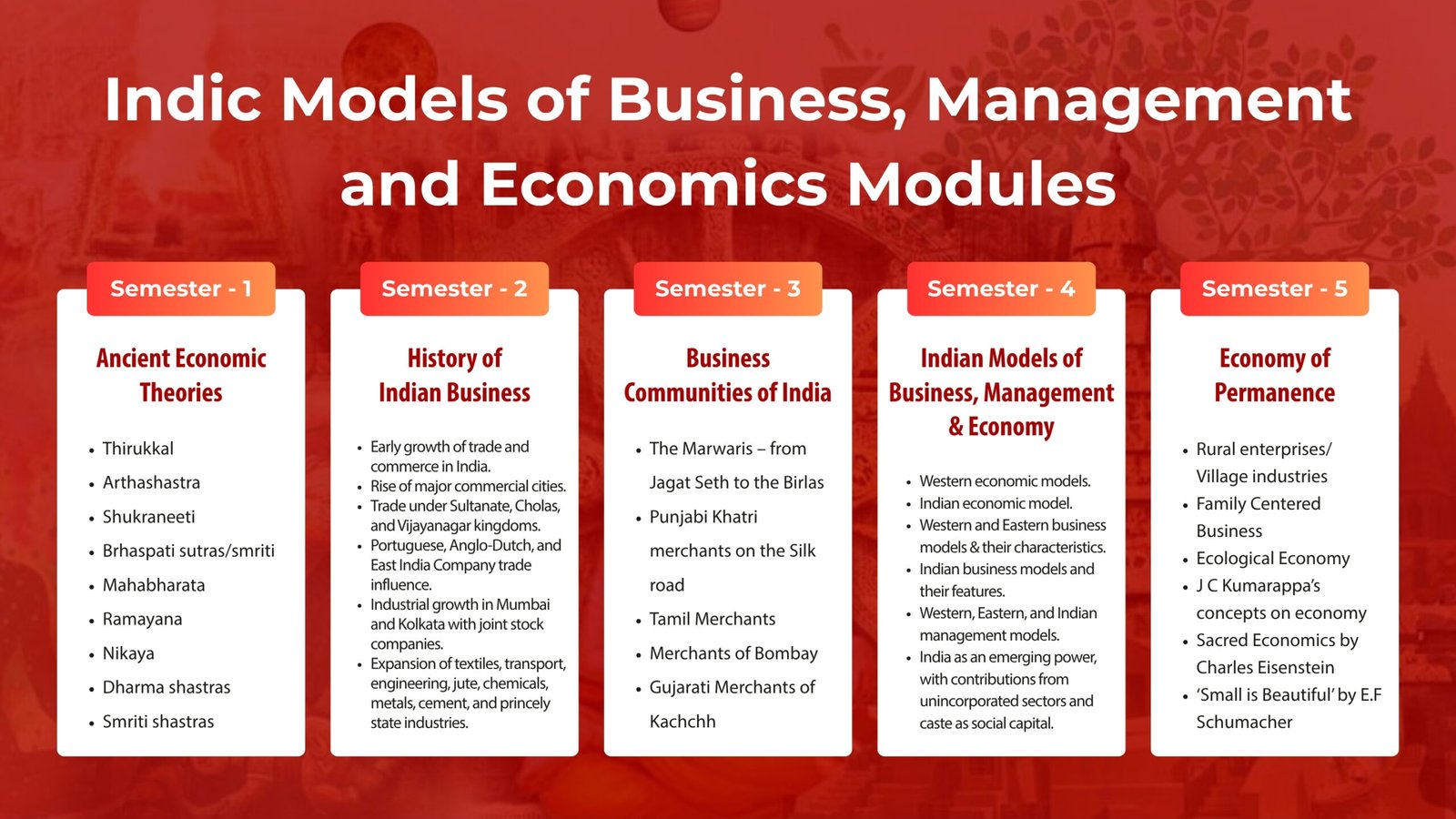
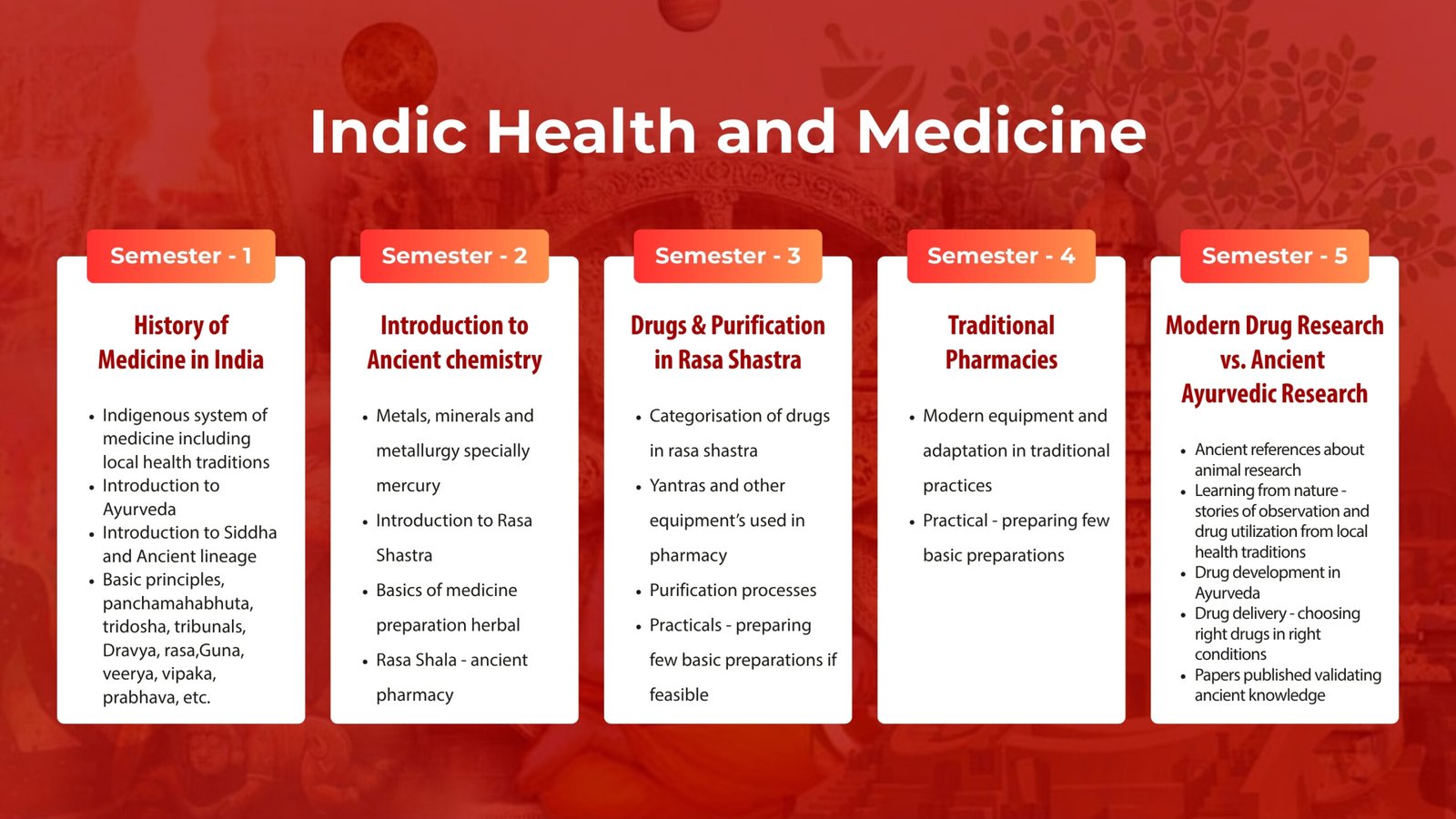
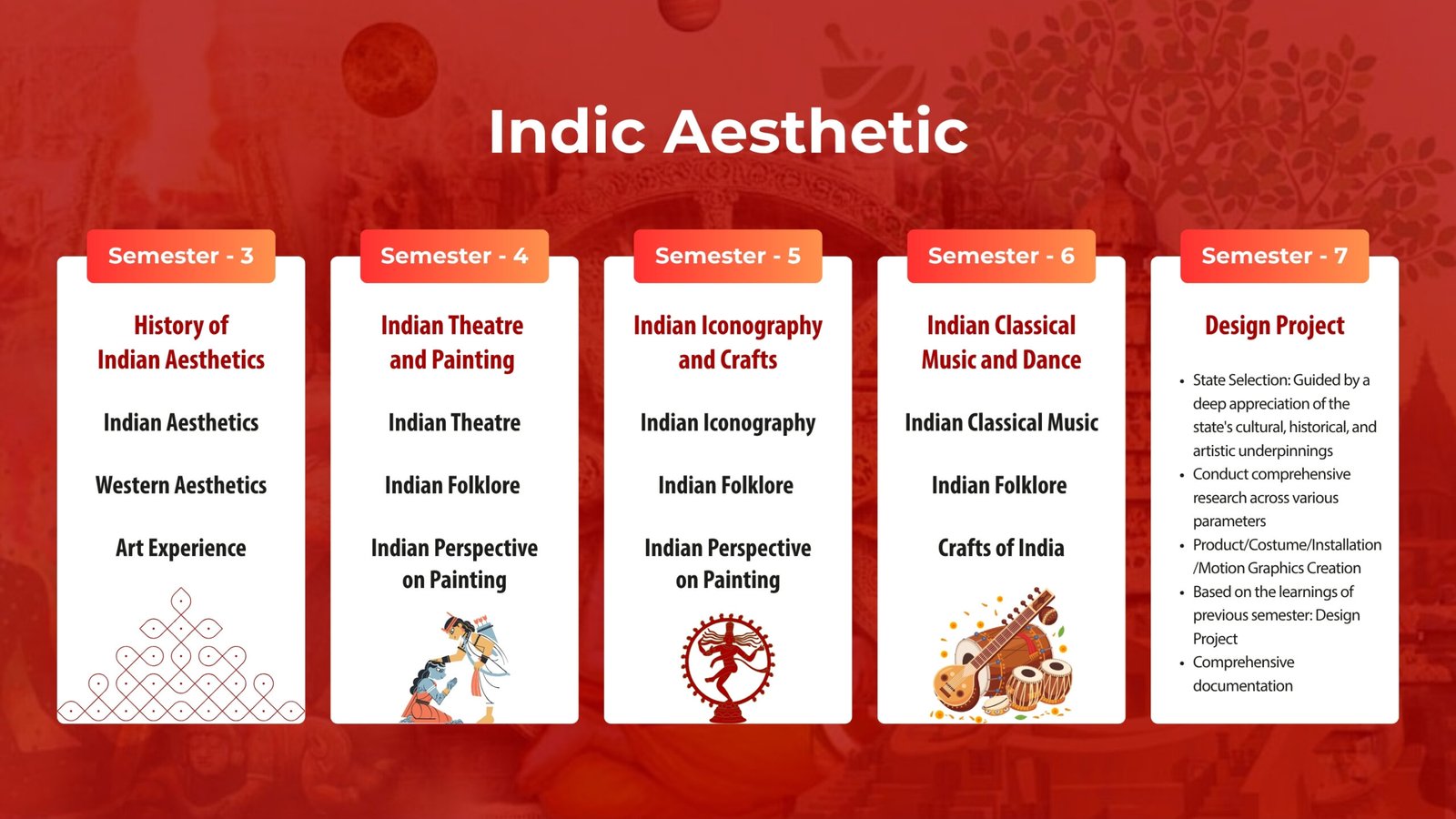
A significant portion of this teaching takes place through core or major courses that are embedded within the formal academic structure. These courses are typically introduced across semesters 1 to 6 and ensure that students from engineering, science, commerce, and management backgrounds receive foundational exposure to IKS. The curriculum includes both General IKS courses, which introduce broad civilizational concepts, and Subject-Specific IKS courses, which contextualize Indic knowledge within particular disciplines. This dual approach ensures that students not only understand the philosophical and cultural foundations of Indian knowledge but also recognize its relevance to their chosen fields.
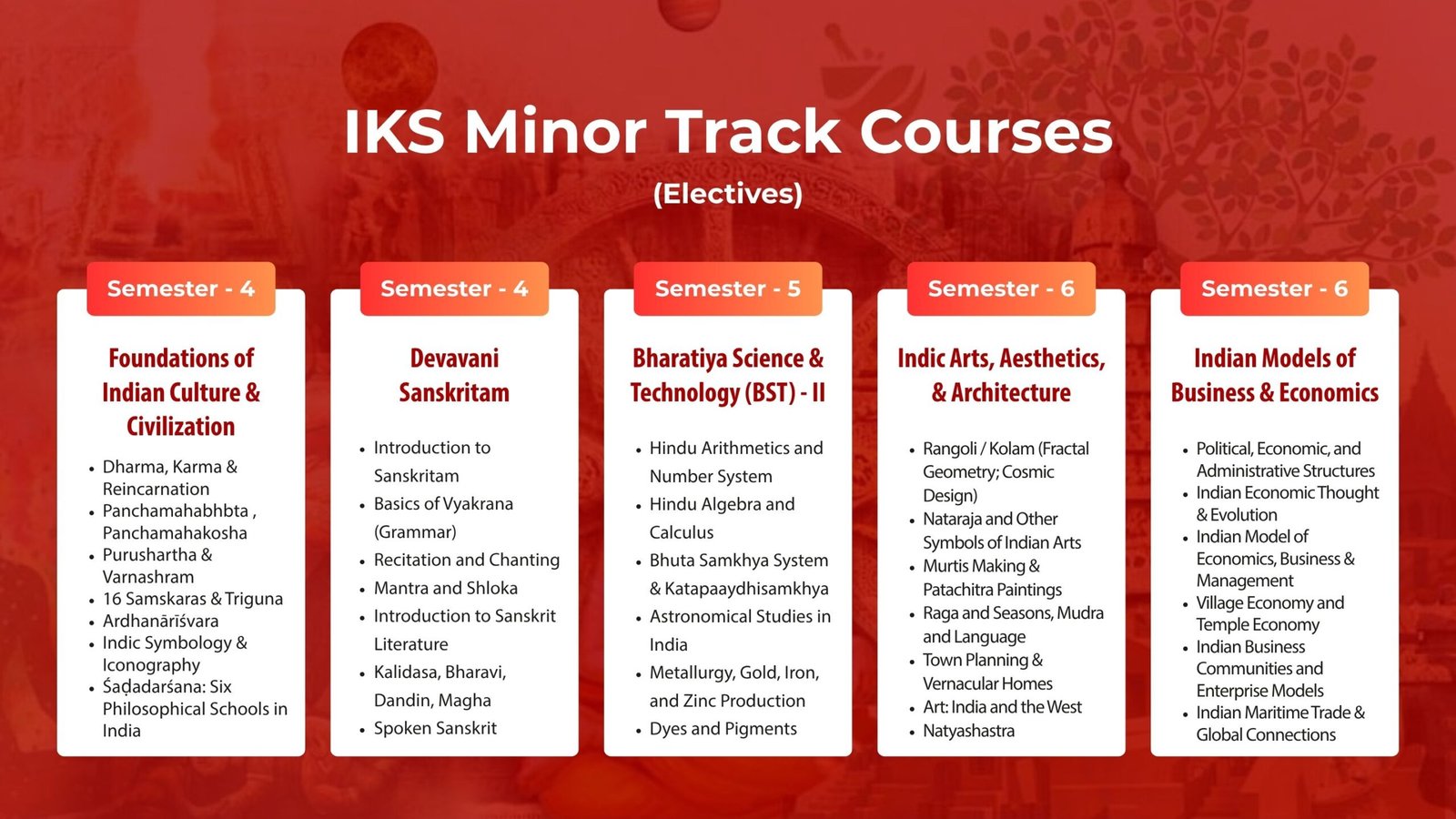
In addition to core courses, the Centre offers minor tracks and elective pathways that allow students to engage more deeply with IKS. These include structured minor programmes such as “Foundations of Indian Culture and Civilization,” along with elective modules that students can opt for based on interest. Though smaller in enrolment compared to core courses, these tracks play a crucial role in developing deeper specialization and sustained engagement with Indic thought.
We uphold a balanced distribution between General IKS and Subject-Specific IKS courses, highlighting the Centre’s commitment to both breadth and depth. Students in technical fields, for instance, encounter IKS through lenses such as traditional sciences, ecology, and knowledge systems, while those in commerce and management explore Indic perspectives on economy, ethics, and society. Similarly, programmes in design and allied fields are introduced to aesthetic and cultural dimensions rooted in Indian traditions.
Through this multi-tiered structure— spanning major courses, minor tracks, and electives— the Centre has successfully institutionalized IKS teaching at scale. Its model ensures not only widespread exposure but also meaningful academic engagement, enabling thousands of students each year to connect with India’s knowledge traditions in a structured, rigorous, and contextually relevant manner.