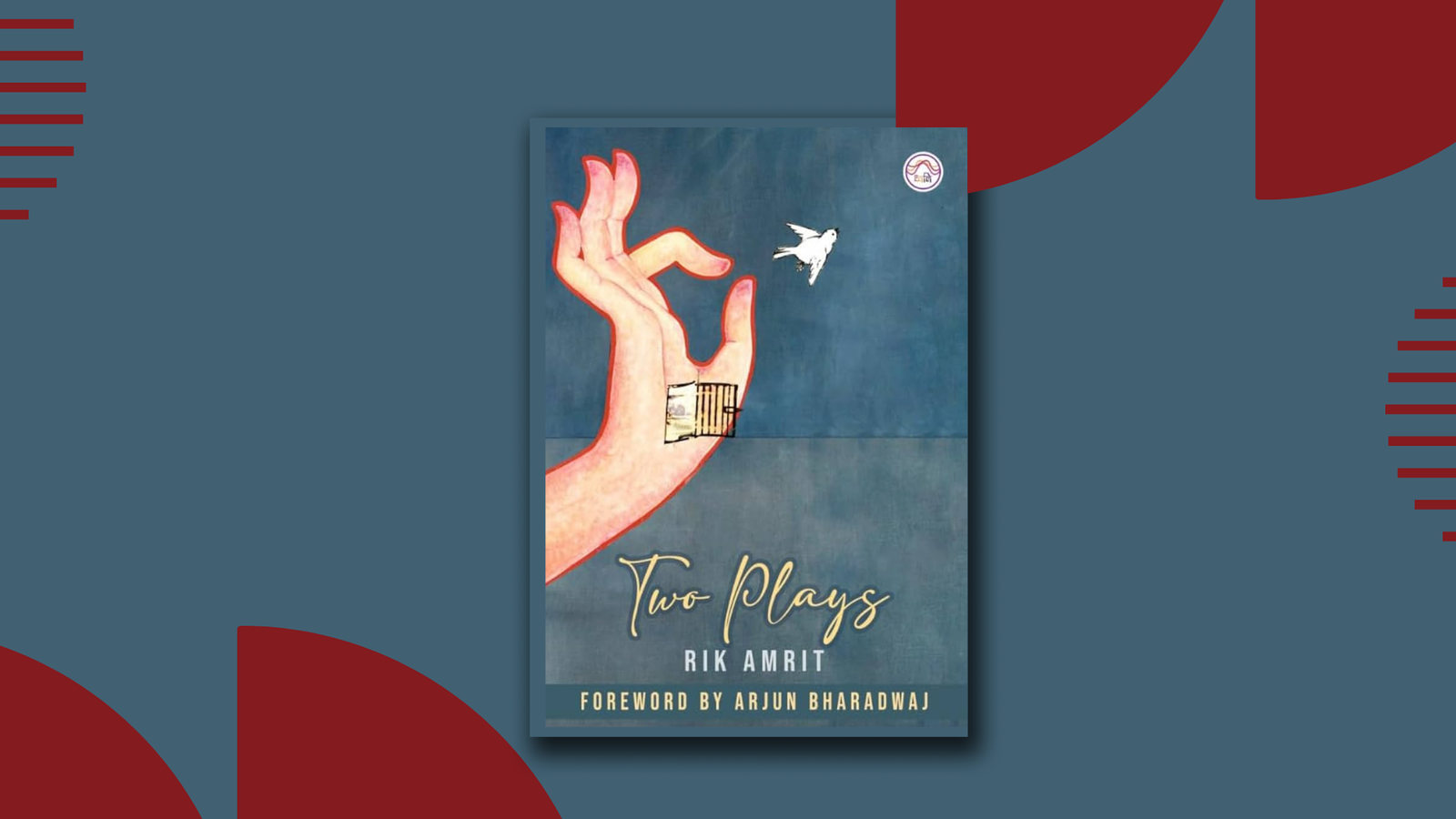
In his play Mālavikāgnimitram, Kālidāsa makes one of his characters declare “nāṭyaṃ bhinnarucerjanasya bahudhāpyekaṃ samārādhanam”, meaning “theatre art or drama is that singular form of entertainment that can cater to people of variegated tastes”. This statement he made over fifteen centuries ago holds true even today. Drama can capture the hearts of the lay and the learned alike– it caters to both the auditory and visual senses, thereby intensifying the experience of a story. Such a requirement is felt all the more when a value needs to be communicated suggestively. In this background, the two plays penned by Sri Amritanath Bhattacharya are of significance.
Amritanath (‘Rik’), who has a deep interest in classical literature and theatre, is not only well-read in various genres but also has practical experience playing different kinds of roles in drama productions. He possesses the unique ability of grasping suggestions, i.e., dhvanis in stories, and understands the heart of characters very well. Only a true connoisseur can become a good writer or an artist; just as a single-sided coin does not exist, artistry without sahṛdayatā cannot exist; in this context, it is meaningful to recall the words of the versatile scholar Abhinava-gupt– “sarasvatyāstattvaṃ kavi-sahṛdayākhyaṃ vijayate”, meaning “Devī Sarasvastī manifests as the artist and the connoisseur”.
Reimagining and recasting a story that is in prose form into the form of a play requires a unique set of skills. The playwright must ensure that the profundity of the story isn’t lost while bringing it into the audio-visual domain; he might have the introduce newer characters and incidents to bolster the main plot. The aspects that the original poet says in his own voice will have to come through the voice of the characters, while keeping in mind the propriety of utterance – in other words, kaviprauḍhokti must be transformed into kavinibaddha-prauḍhokti without losing out on aucitya.
Spatiotemporal elements must be added, and specificity of costumes, stage properties, and body mannerisms should be brought in by the playwright. These and many more challenges are faced by writers who aim to turn a story into a play; only a talented and imaginative person can successfully address these issues without causing aesthetic rupture.
Upon going through the two plays in this book, I am convinced of Rik’s imaginative skill and his prowess in the lucid usage of language. In the first play based on a Buddhist jātaka story, the author beautifully suggests how certain beliefs and rituals are held high, while their origin and true essence are lost; the futility of blind beliefs and the importance of contemplative understanding of the Supreme are suggested through the golden peacock, which becomes a metaphor throughout the story. The second play highlights how vile nature endures even at the brink of death; life situations do not lead to refinement in all kinds of people; the presence of noble souls around us may not enrich our lives if we are not cognizant of their importance and value– Aśvatthāmā, an epic character from the Mahābhārata, is not only an embodiment of misdeeds but also misinterprets Kṛṣṇa’s intentions. While the first play leaves us with a sense of peace and serenity, the second awakens us to the consequences of deep-seated animosity.