- Visitor:133
- Published on: 2025-09-20 09:04 pm
(Re-)Thinking on the Debate of Greeting on the Mahālayā
Across cultures, remembering of the dead affirms continuity, gratitude, and identity. Whereas Mexico’s Día de los Muertos celebrates the departed with music and offerings, Japan’s Obon lights lanterns and dances to welcome ancestral spirits. Whereas China’s Qīngmíng Jié blends filial piety with seasonal renewal, the Celtic Pagan festival Samhain, later absorbed as the Christian All Souls’ Day, marks a thinning veil between worlds. These traditions share an ethical imperative: to remember the ancestors. Yet, the Indic tradition of Mahālayā stands apart by offering a metaphysical depth unique to the Sanātana Dharma. Here, remembrance is not merely emotional, but rather ontological. The pitṛs are not absent; they dwell in subtle realms (pitṛloka) and their blessings shape the trajectory of the successors. To honour them through śrāddha and tarpana is to participate in a cosmic cycle of dharma, laced with gratitude and spiritual continuity. Mahālayā, thus, becomes not a day of mourning, but a sacred threshold where ancestral invocation and divine descension converge.

- Share on:


Each year in the season of autumn, as
the dark fortnight of Pitṛpakṣa
wanes and the luminous Devīpakṣa
begins, Mahālayā
arrives— not merely as a calendrical marker, but as a profound civilizational
moment. In the Indic tradition, this day is a confluence of remembrance and
invocation: we honour our pitṛs
(ancestors) and simultaneously prepare to welcome Devī Durgā, the embodiment of śakti and the cosmic order.
Yet, in recent years, debates have
emerged, particularly on social media, questioning whether Mahālayā can be greeted as
śubha
(auspicious). Is it appropriate to celebrate a day associated with ancestral
rites? Or does such celebration dilute the solemnity of death? To answer this,
we must look beyond the surface and explore how different civilizations
approach death, memory, and the ethics of honoring those who came before. In
doing so, we uncover the unique dhārmika
sensibility that makes Mahālayā
not only śubha,
but also spiritually luminous.
Remembering
the Dead: Across Different Cultures
Across civilizations, the act of
remembering the dead is not merely a cultural ritual, but it is a sacred
gesture that affirms continuity, expresses gratitude, and anchors identity. It
is through remembrance that societies maintain a living connection with their
past, honouring those whose lives shaped the present.
In Mexico, Día de los Muertos (Day of the Dead)
transforms cemeteries into vibrant spaces of music, food, and familial bonding.
Altars adorned with marigolds, sugar skulls, and favourite foods of the
departed reflect a worldview where the dead are not mourned but joyfully
welcomed. The veil between worlds is seen as porous, and memory becomes
celebration.
In Japan, the Buddhist festival of Obon similarly bridges
realms. Lanterns are lit to guide ancestral spirits navigate their celestial
home, and dances like Bon
Odori express reverence through communal joy. The ritual is not
solemn, but rather it is rhythmic, luminous, and filled with grace.
China’s Qīngmíng Jié (Tomb-Sweeping Day) involves
cleaning ancestral graves and offering food, symbolizing what they call ‘xiào’ or filial piety. It also marks the seasonal renewal.
Here, if we closely observe, remembrance is tied to both ethical duty as well
as a natural rhythm.
Known as Samhain, the Celtic Pagan festival marked the end of the summer and the
beginning of the winter. This Pagan festival is special as it observes that
during that particular time (which is also regarded as the Celtic New Year) the
veil between the living and the dead becomes thin, enabling the departed souls
to communicate with their progeny. In later years, the festival was absorbed
into the Christian
tradition across Europe under the nomenclature of the ‘All Souls’ Day’ which also commemorates
the departed with prayers and masses, often in sombre tones.
Mahālayā:
Between Laya and Āgama
What unites the abovementioned
traditions is the ethical imperative to remember. But, what distinguishes the
Indic tradition of the Mahālayā
is its metaphysical depth. In the Sanātana Dharma, remembrance is not merely
emotional, it is also ontological. The pitṛs
are not absent: they dwell in subtle realms (pitṛloka),
and their blessings shape the trajectory of the living ancestors. To honour
them is to participate in a cosmic cycle of gratitude and spiritual continuity
of dharma.
The word Mahālayā itself is layered with multifarious
meaning. In Sanskrit, ‘mahā’ denotes greatness, and ‘ālaya’ means abode. But ‘laya’ also signifies dissolution, especially into the Parabrahman, the Supreme
Consciousness. It is, in essence, a moment of mokṣa. Simultaneously, Mahālayā heralds the
arrival (āgama)
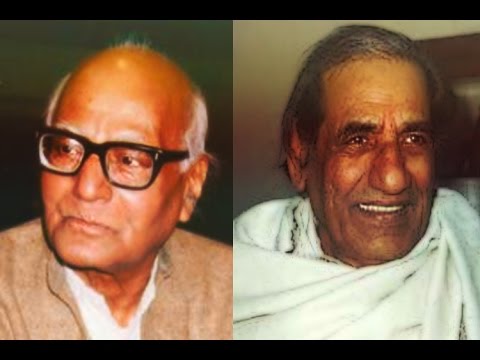
of the Goddess. In Bengal, this is marked by the iconic recitation of Mahīśāsura Mardinī,
composed by Pankaj Kumar Mallik and immortalized by
Birendra Krishna Bhadra. The air vibrates with chants of “yā devī sarvabhūteṣu” and
the collective psyche shifts from mourning to invocation. This duality of
dissolution and descent is uniquely Indic. It reflects the ṛta (cosmic order) where
death and life are not opposites, but phases of the same cycle. To greet Mahālayā as śubha is to honour this
sacred rhythm.
Let’s
Dive into the Indic Liturgy
Critics often
argue, asking: “Do we say śubha
śrāddha while attending a funeral rituals for the departed?” The
implication is that death is inauspicious, and therefore any associated ritual
must be solemn, not celebratory. But this view is both linguistically and
philosophically flawed. The word ‘śrāddha’ derives from ‘śraddhā’ (faith, reverence) with an addition of the suffix ‘aṇ’, forming a noun that means “an act of reverence.” It is
not a mourning ritual, rather more of a dhārmika
obligation, a karma
that sustains the lineage and honours the pitṛs.
In fact, the Manusmṛti
(3.203) states:
दैवकार्याद् द्विजातीनां पितृकार्यं विशिष्यते।
दैवं हि पितृकार्यस्य पूर्वमाप्यायनं स्मृतम्॥
daivakāryād dvijātīnām
pitṛkāryaṃ viśiṣyate |
daivaṃ hi pitṛkāryasya
pūrvamāpyāyanaṃ smṛtam ||
[Among twice-born men, the rite in honour of the pitṛs is superior to that in honour of the devas; the rite for the devas
is considered a preliminary sustainer of the rite for the pitṛs.]
At
the same time, in the Bhagavad
Gītā (2.20), Śrī Kṛṣṇa declares:
न जायते म्रियते वा कदाचिन्
नायं भूत्वा भविता वा न भूयः ।
अजो नित्यः शाश्वतोऽयं पुराणो
न हन्यते हन्यमाने शरीरे ॥
na jāyate mriyate vā kadācin
nāyaṃ bhūtvā bhavitā vā na bhūyaḥ |
ajo nityaḥ
śāśvato'yaṃ purāṇo
na hanyate hanyamāne śarīre ||
[The soul neither takes birth nor does
it die, nor is it affected by the repeated growth and dwindling of the body. It
is unborn, eternal and ever-existing. Though primeval, it remains
ever-youthful. The soul is not annihilated even when the body perishes.]
Death, in this view, is not an end,
but rather it is a mere transition. For yogīs
and realized beings, it is the moment of samādhi,
of merging with the Absolute. Saints like Rāmakṛṣṇa Paramahaṁsa
and Ramana Maharṣi embraced death as the ‘mahāsamādhi’, a culmination of their spiritual journey. Thus, to call Mahālayā as ‘śubha’ is not to trivialize death, rather it is to recognize its
sacredness.
Greeting the Goddess, Honouring the
Ancestors
To greet Mahālayā as ‘śubha’ is to affirm the dhārmika worldview where death is not
negation, but transformation. It is to honor the pitṛs who shaped our lives, and to welcome
the Devī who
restores cosmic balance. It is to recognize that remembrance and invocation are
not contradictory, rather they are complementary. In a time when civilizational
memory is under threat, and dharmic rituals are reduced to superstition or
sentimentality, we must reclaim the philosophical depth of our traditions. Mahālayā is not just a day
of observance, it is a mirror of our metaphysics, our aesthetics, and our
ethics. So let us say it without hesitation, and with full reverence: Śubha Mahālayā!
- 66 min read
- 3
- 0